

Capitalist free markets are very good at delivering products at the lowest possible price. Granted, the lowest possible price is often associated with abysmal wages and minimal environmental standards. But worse than that, free markets have a strong tendency to put too many eggs in too few baskets, which makes them fragile.
The Gulf States can produce oil and gas products very cheaply. Which means an inordinate amount of global energy production has come from the Middle East. Which leaves the whole world vulnerable if those supplies are cut off. Critical shortages of oil, natural gas, diesel and jet fuel are just the beginning.
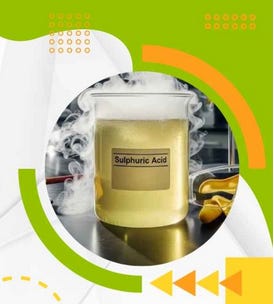
Sulphuric acid is used in the refining of copper, nickel, cobalt, zinc, rare earths and lithium. It is essential to the production of phosphate fertilizers. Sulphuric acid has literally dozens of key industrial uses.
Sulphur is a pollutant in most crude oil. It needs to be removed before that oil or its byproducts can be burned cleanly. The Middle East refines such massive quantities of crude oil that it produces a great deal of sulphur as an almost-free waste product. Though it is quite possible to mine sulphur directly, it is expensive to do so. Most sulphur mined underground cannot compete on price.
As a result, the Middle East produces an inordinate amount of the world’s sulphur, which is then used to produce an inordinate amount of the world’s sulphuric acid.
The closure of the Strait of Hormuz has kept a massive amount of sulphuric acid off world markets for the past 82 days. Whatever inventories mining and fertilizer companies had, is now gone. Though some sulphuric acid is produced in other places, there’s not enough to meet the demand.
Indonesia can produce nickel cheaper than anywhere else, so free market forces result in Indonesia producing more than 60 percent of the world’s nickel.
Because the Iran War has also locked up substantial Middle East aluminum exports, it has caused prices for aluminum to rise by 12 percent. That makes it more cost-effective for Chinese companies in Indonesia to use the available electrical power to make aluminum rather than nickel. The high cost and limited availability of sulphuric acid for nickel refining creates a further incentive to produce aluminum rather than nickel.
Indonesia reducing nickel production has driven up global nickel prices by 3 percent overnight. Nickel is used in batteries, and for making stainless steel, both of which will now be more expensive to produce.
Hydrogen is an impurity in natural gas. Again, the massive amounts of natural gas produced in the Middle East means massive amounts of almost-free hydrogen. Hydrogen can be used to create ammonia using the Haber-Bosch process, which can then be used to create urea, the most common nitrogen-based fertilizer. Though it is quite possible to create hydrogen through the electrolysis of water, hydrogen made that way is more expensive, with the result that 36 percent of the world’s urea fertilizer is produced in the Middle East.
The Iran War has trapped massive amounts of urea fertilizer stocks in the Middle East. Qatar shutting down its natural gas production has also halted hydrogen and urea fertilizer production since the early days of the war. Once again, having so much of the world’s nitrogen fertilizer sourced from one place creates a fragility in supply chains. Urea prices have risen by more than 50 percent since the closure of the Strait of Hormuz. Farmers worldwide are struggling as a result, and higher food prices are on the way.
I could go on and on - motor oil for your car, hydraulic fluid essential to forklift maintenance, aluminum and plastics for packaging, helium for computer chip production - all are in increasingly short supply since Middle East producers were cut off. All are more expensive if they can be found. Each day the Strait of Hormuz is closed it gets a little bit worse.
I cannot tell you on which day the tipping point will be reached. But every day the Strait of Hormuz is closed, the world is one day closer to a painful economic unravelling. The clock is ticking.
The COVID pandemic, made an order of magnitude worse by panicked governments’ shutdown mania, was a harsh lesson in the fragility of global supply chains in 2020 and 2021.
The war in Ukraine, and more importantly the boomerang sanctions which accompanied that war, created yet more economic stress tied to supply chain fragility, mostly strongly in 2022, but really all the way through to 2026, particularly in Europe.
An unprovoked war of aggression against Iran, brought to you by an American President slavishly serving Israel’s expansionist goals, will create unprecedented levels of chaos and deprivation throughout the remainder of 2026, given the ugly math that each day the Strait of Hormuz has been closed will require three days of recovery before energy markets can return to something approaching normal.
Most analysts are saying that a global recession/depression will be inevitable if the Strait of Hormuz remains closed for another month. Ditto if Trump makes good on his threats to attack Iran again. Either would extend the current economic mayhem well into 2027.
If nothing else, the past six years should convince us that the ‘bargains’ created by long and lopsided supply chains can be very expensive in a less-than-orderly world.
I’m not sure how to build a more resilient system than the one we now have. I am sure, that if don’t figure out how to do so, more pain, chaos and deprivation lies ahead.
PS: Left to its own devices, the free market cares only about profit. Crude oil is now being refined to maximize jet fuel production as the most lucrative petroleum product, which means less gasoline and diesel is being produced. Which is great for globe-trotting vacationers, but not so good for farmers, truck drivers and the poor plebs who have to drive to work. Free markets make better servants than masters.
"An unprovoked war of aggression against Iran,... will create unprecedented levels of chaos and deprivation throughout the remainder of 2026..."
Given the years required to rebuild some of these facilities, such as the LNG, we will be feeling the effects of this for the rest of the decade.
Hi Bruce. Found you via MoA.